
If you are interested in permaculture, regenerative living, food forests, homesteading, or growing more of your own food, you may be wondering: is a Permaculture Design Course actually worth it?
The short answer is yes, especially if you want more than scattered information from books, videos, and trial and error. A Permaculture Design Course, often called a PDC, gives you a structured way to understand how natural systems work and how to apply those patterns to land, gardens, and communities.
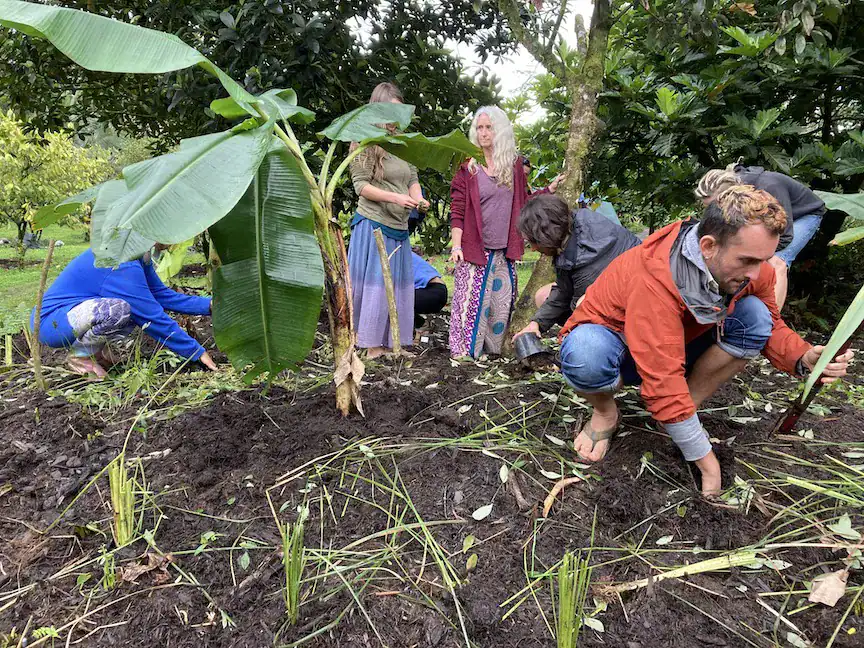
At Rainbow Bridge Hawaiʻi, our Permaculture Design Certification Course on the Big Island is designed for people who want to learn in an immersive, hands-on environment. Instead of only studying concepts, students get to experience permaculture principles in action through land-based learning, community living, tropical agriculture, and guided instruction.
What Is a Permaculture Design Course?
A Permaculture Design Course is a deeper introduction to the ethics, principles, and practical tools of permaculture design. Students learn how to observe land, understand natural patterns, design growing systems, work with water, build soil, create food forests, and think about human communities as part of ecological design.
For many people, a PDC is the bridge between being interested in permaculture and feeling confident enough to actually begin applying it.
You may come into the course with questions like:
- How do I design a garden that works with nature instead of against it?
- How do food forests actually function?
- How do I make better decisions about water, soil, plants, and energy?
- How do I create a more regenerative lifestyle where I live?
A strong PDC helps you connect those questions into one bigger picture.
Why Not Just Learn Permaculture on Your Own?
It is absolutely possible to start learning permaculture by yourself. There are books, videos, podcasts, and online resources that can teach you a lot. Self-study is a great first step.
But there is a major difference between learning concepts on your own and learning directly from experienced professionals who can help you understand how those concepts work in real life.
In permaculture, context matters because you are building a whole design system. Climate, rainfall, slope, soil, sun exposure, plant relationships, water flow, and human needs all affect what will actually work.
When you learn by yourself, it can be difficult to know what applies to your situation and what does not. You might spend months trying techniques that are not right for your climate, your land, or your goals. You may understand the idea of a food forest, for example, but still feel unsure about how to design one, where to begin, or how different elements should work together.
Learning from professionals helps shorten that learning curve. You get guidance, feedback, real examples, and the chance to ask questions as they come up. Instead of trying to piece everything together alone, you are learning within a framework that has been intentionally designed to help you build confidence.
The Value of Hands-On Learning
One of the biggest reasons a permaculture design course is worth it is that permaculture is best understood through direct experience.
You can watch videos about tropical food forests, but it is different to walk through one, observe the layers, taste the fruit, and see how plants support each other. You can study water systems, but it is different to stand on the land and understand how water actually moves through a place.
At Rainbow Bridge Hawaiʻi, students are able to learn in a living environment where permaculture is not just a theory. The land, the gardens, the community, and the daily rhythms all become part of the learning experience.
Is a PDC Worth It for Beginners?
Yes, a PDC can be especially valuable for beginners.
You do not need to be an expert gardener, farmer, builder, or designer before taking a permaculture design course. In fact, many people take a PDC because they are ready to move beyond curiosity but do not yet know where to start.
A good course gives beginners a foundation. It helps you understand the language of permaculture, the ethics behind it, and the basic tools used to observe and design regenerative systems.
For beginners, the value is in the confidence that comes from learning in a supportive environment. Instead of feeling overwhelmed by everything you do not know, you begin to see a path forward.

Is It Worth Traveling for a PDC?
For some students, taking a PDC in a place like Hawaiʻi adds another layer of value.
The Big Island offers a powerful environment for learning about tropical permaculture, food forests, water systems, volcanic soil, abundant plant life, and off-grid or community-based living.
It also gives students the chance to learn in the middle of Hawaiʻi’s tropical paradise, surrounded by lush landscapes, warm weather, waterfalls, and the kind of natural abundance that makes permaculture feel alive.
Traveling for a PDC can also help you step outside your normal routine. When you are fully immersed in the course, the land, and the community, it becomes easier to focus, absorb, and reflect. You are not just fitting learning into your regular life. You are giving yourself a dedicated container for growth.
What Do You Walk Away With?
A Permaculture Design Course can give you practical knowledge, but it can also change the way you see the world.
You may walk away with a stronger understanding of how to design gardens, food forests, water systems, and regenerative spaces. You may also leave with new language, new confidence, and a clearer sense of how your daily choices connect to the larger ecosystem.
For some people, a PDC becomes the beginning of a homesteading journey. For others, it supports work in farming, gardening, education, sustainability, land stewardship, or community building. And for many, it simply offers a more grounded way to relate to food, land, and place.
Who Is a PDC Best For?
A permaculture design course may be a good fit if you are interested in:
- Learning permaculture from experienced teachers
Starting or improving a garden, homestead, or food forest - Understanding regenerative design more deeply
- Living closer to the land
- Exploring sustainable or intentional community
- Gaining hands-on experience instead of only studying online
- Meeting other people who care about ecology, food, and community
A PDC may be especially valuable if you feel inspired by permaculture but unsure how to apply it in real life.
So, Is a Permaculture Design Course Worth It?
If you are serious about learning permaculture, a PDC is worth considering.
Self-study can introduce you to the ideas, but a professionally guided course helps you understand how those ideas come together as a complete design system. You get structure, mentorship, real-world examples, hands-on practice, and a community of people learning alongside you.
At Rainbow Bridge Hawaiʻi, the Permaculture Design Certification Course offers an immersive way to study permaculture on the Big Island while experiencing land-based learning, community living, farm-fresh meals, tropical abundance, and the beauty of the natural world.
If you are ready to move from curiosity into practice, book your spot in our upcoming course here!