
Understanding the Basics of Regenerative Living
Homesteading is all about living in a way that emphasizes self-sufficiency and a deep respect for the land.
You might find yourself growing your own food, constructing your own shelter, managing water resources, or even revitalizing the soil. At its core, homesteading poses a fundamental question: how do you harmonize your life with nature and your community?
For many, the journey into homesteading begins on a small scale.
It could be as simple as:
- A backyard garden
- A commitment to cutting down on waste
- Learning the art of food preservation
On the other hand, some envision a more significant transformation.
This might involve:
- Moving to a piece of land
- Building their own homes
- Creating long-term regeneration projects
What ties these different paths together is intention. Essentially, you get to decide where your food comes from, how your shelter functions, and how you connect with the Earth.
How you embark on your homesteading journey really depends on your personal circumstances and available resources.
On Hawai’i Island, the approach to homesteading takes on a unique flavor. The local climate, soil types, water systems, and cultural influences all play a role in what you can cultivate, construct, and care for.
Why Hawai’i Island offers a different perspective on homesteading
The tropical environment provides a steady abundance:
- Consistent year-round production
- Ongoing growth
- Reliable warmth
Because of this, the challenges you face differ from those in colder regions. Instead of worrying about winter storage, you’ll need to design systems that align with the tropical rhythm.
That’s why homesteading must be tailored to its location. You can’t learn the nuances of tropical homesteading from a book focused on temperate climates.
Instead, you should:
- Observe established systems in authentic tropical settings
- Utilize local materials
- Get to know the volcanic soil and the trade winds
- Learn from those who have dedicated years to overcoming these unique challenges
Homesteading also intertwines practical skills with personal development.
So, as you grow food, build shelter, and care for the land, you gain more than just physical supplies. You also cultivate connection, healing, resilience, and a sense of belonging.
Permaculture, Natural Building, Water Systems & Soil Regeneration
Homesteading is made up of four key skills. Each skill allows you to develop systems that provide for abundance and enable good land stewardship.
Permaculture Design & Food Production
Rather than struggle against the weather, permaculture design observes nature and establishes robust food systems.
In a tropical context, this involves:
- Designing food forests that produce year-round
- Composting systems that move fast in warm climates
- Choosing crops suited to local conditions
- Layering plants (trees, shrubs, herbs, ground covers) that support each other
- Rotational feeding animals on the land
Through time, the homesteader increases production and soil health. As a result, they establish habitats and reduce reliance on external inputs.
Natural Building with Local Materials
Homesteading Shelter is all about the trade-off between luxury and comfort & safety in your environment.
Requirements for Tropical Construction include:
- Heat management
- Humidity control
- Pest resilience
- Heavy-rain durability
Natural building structures consist of earthen materials and recycled materials. Therefore, the buildings “breathe” and are low-impact.
Plus, you learn to:
- Source materials locally
- Understand basic structure
- Use cob, timber-frame, and smart airflow
Water Systems & Land Regeneration
Water is urgent but abundant in Hawai’i Island. Hence, homesteading involves harvesting rainwater, holding water, sending greywater to gardens, and assisting recharge.
These activities determine whether the land can recover.
Soil Building & Land Stewardship
Tropical soils need consistent attention. Therefore, successful homesteading requires soil biology, composting, cover cropping, and long-term restoration of land.
This is stewardship. In other words, it is not taking land but building it.
How to start homesteading with these skills:
- Hands-on learning in real systems
- Guided by experienced practitioners
- Paired with simple theory you can use right away
From Dreaming About Homesteading to Actually Building It
Many people dream of homesteading, though few actually pursue this dream.
In part, the gap is practice. Reading about permaculture is not the same as building a food forest.
Likewise, watching a natural building video isn’t the same as living in what you built. That is why immersive training matters.
Why hands-on learning matters
You can learn homesteading ideas from books. Still, homesteading is something you do with your body.
To learn well, you need:
- Soil under your fingernails
- Mature systems producing right now
- Water work shaped by real land
- Structures built with real materials
- Practitioners who’ve solved tropical homesteading on Hawai’i Island
When training happens on real land, you speed up learning. In fact, you can skip years of trial and error.
First, you learn the theory. You study principles, ethics, and patterns.
Next, you practice in the field:
- You design a food forest
- You build water systems
- You work with earth and materials
As a result, ideas and action support each other.
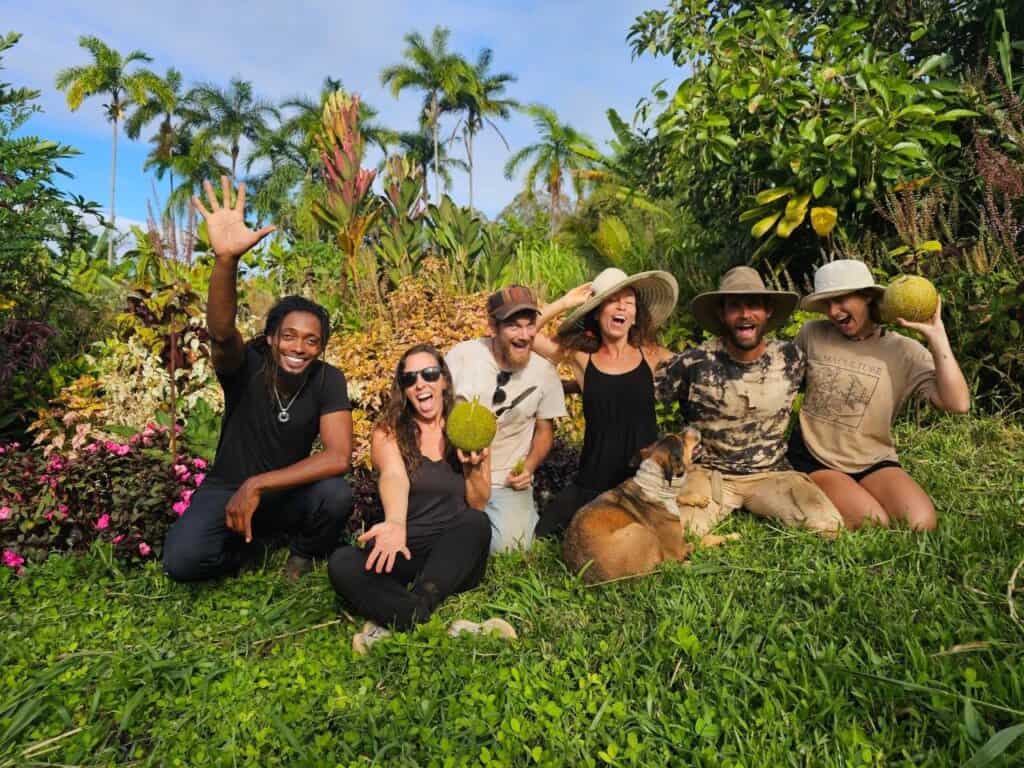
Third, you learn in community. Homesteading at scale needs teamwork.
So when you learn alongside others, you build:
- Accountability
- Peer support
- Relationships that last after training ends
Altogether, classroom learning plus daily practice leads to “embodied wisdom.” In other words, the knowledge sticks.
FAQ
How is homesteading different on Hawai‘i Island?
Homesteading on Hawai‘i Island is shaped by tropical climate, volcanic soil, trade winds, rainfall patterns, and year-round growing conditions. Unlike colder climates, where homesteaders often plan around winter storage, tropical homesteading requires systems that can handle steady growth, heavy rain, humidity, pests, and continuous food production. This makes place-based learning especially important.
What skills do you need to start homesteading?
The most useful homesteading skills include permaculture design, food production, composting, natural building, water management, and soil regeneration. These skills help people create systems that provide food, shelter, resilience, and long-term land health. Hands-on practice is especially valuable because homesteading is learned through direct work with soil, plants, water, materials, and community.
Why is permaculture important for homesteading?
Permaculture helps homesteaders design systems that work with nature instead of against it. In a tropical setting, this may include food forests, composting systems, layered planting, water catchment, animal rotation, and soil-building practices. Permaculture gives homesteaders a design framework for creating abundance while reducing waste and outside inputs.
What is natural building?
Natural building is the practice of creating structures with low-impact, local, reclaimed, or earth-based materials. For tropical homesteading, natural building also means designing for airflow, humidity, rain durability, pest resilience, and heat management. The goal is to create shelter that is practical, climate-appropriate, and connected to the land.
What is regenerative living?
Regenerative living is a way of life that aims to restore the health of land, people, and community rather than simply reduce harm. In a homesteading context, regenerative living can include rebuilding soil, planting food forests, catching rainwater, composting, using local materials, strengthening community relationships, and designing systems that become healthier over time.
Who is the Permaculture Design Certification for?
The Permaculture Design Certification is for adults who want practical skills in regenerative living, homesteading, land stewardship, and intentional community. It may be especially helpful for people who want to start a homestead, deepen their relationship with land, learn tropical permaculture, build community resilience, or gain a credential that can support future consulting, teaching, or land-based work.
What makes Rainbow Bridge Hawaii’s homesteading training different?
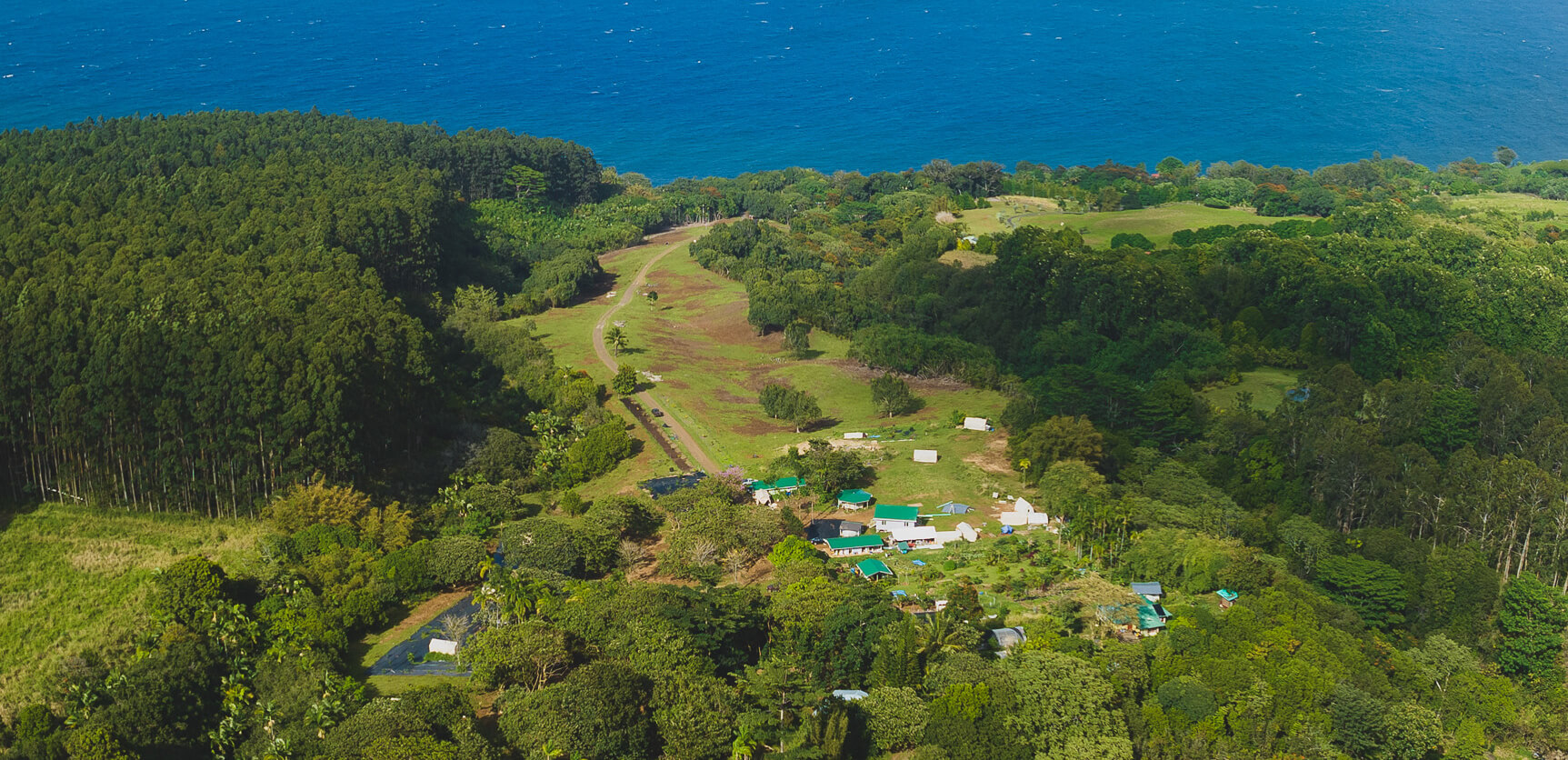
Rainbow Bridge Hawaii’s homesteading training takes place in a real intentional community at the foot of Mauna Kea, where students can observe decades of land transformation and functional regenerative systems. Instead of only learning theory, participants practice food forestry, water systems, soil building, natural building, and community living in an immersive tropical environment.
Move From Aspiration to Expertise With Our Permaculture Design Certification
If homesteading calls to you, take the next clear step. Invest in training that turns intent into skill.
Rainbow Bridge Hawaii’s Permaculture Design Certification is built for adults who want regenerative living. It also supports homesteading and land-based community.
This is a course of hands-on training that covers:
- Permaculture principles and ethics
- Food forestry and composting systems
- Water management and soil building
- Natural building techniques
- Community dynamics
- Social resilience
What makes our permaculture courses different
This is what makes our homesteading training unique:
- Two weeks of full immersion on Hawai’i Island, at the foot of Mauna Kea, living in an intentional community that’s walked this path
- Learning from experienced practitioners who’ve spent years designing and building regenerative systems in tropical conditions
- Observing 30 years of land transformation from overrun plantation to thriving food forests and functional homestead systems
- Daily hands-on practice: You’re building gardens, designing water systems, constructing with real materials
- Community living integrated into learning: You’re experiencing what integrated, regenerative homesteading actually feels like, not theorizing about it
- Certified credential in permaculture design, applicable to homesteading, consulting, or teaching
Ready to start your homesteading journey? Reach out to secure your spot in our next permaculture courses.