
Permaculture in Hawaii at Rainbow Bridge
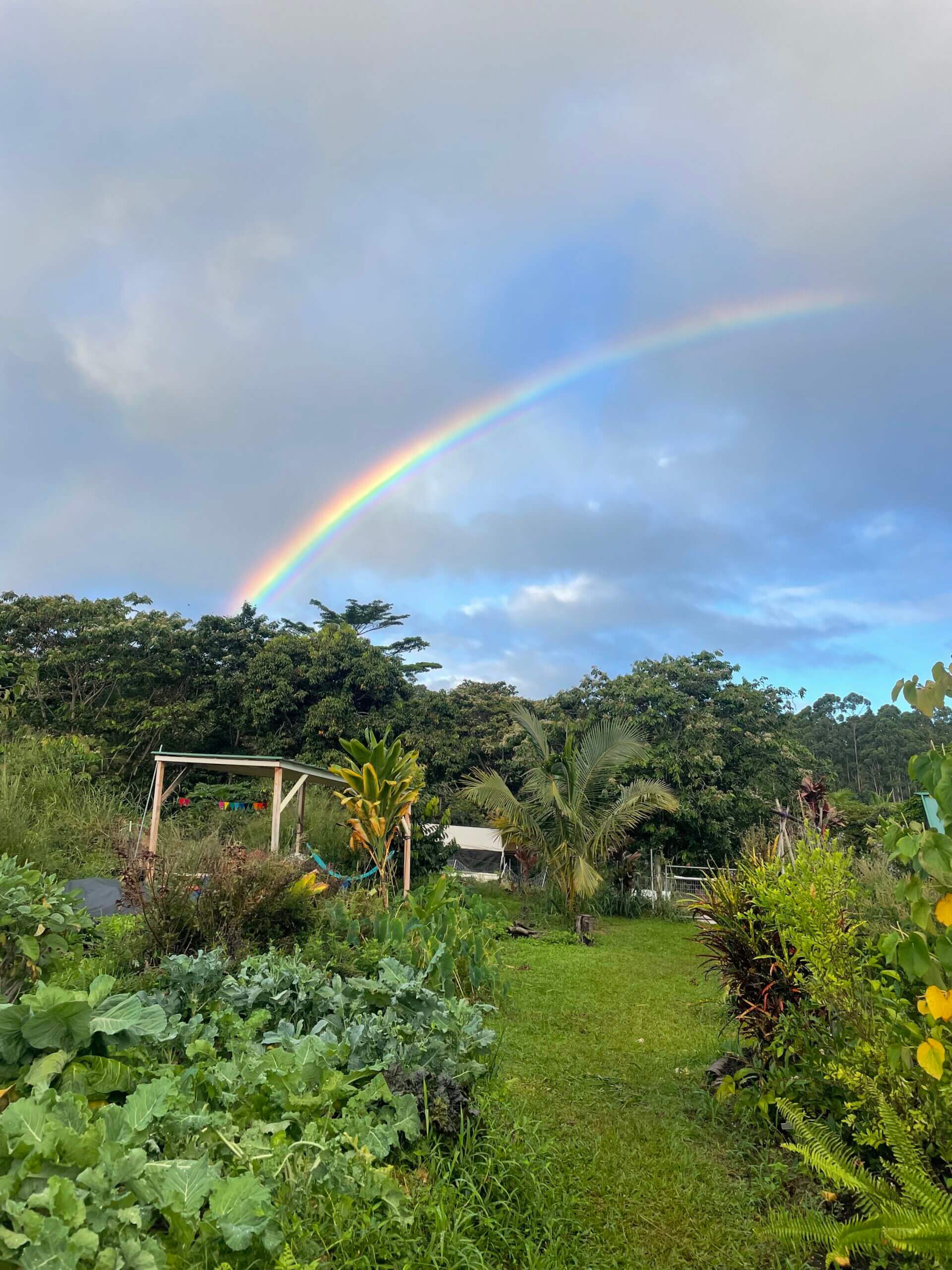
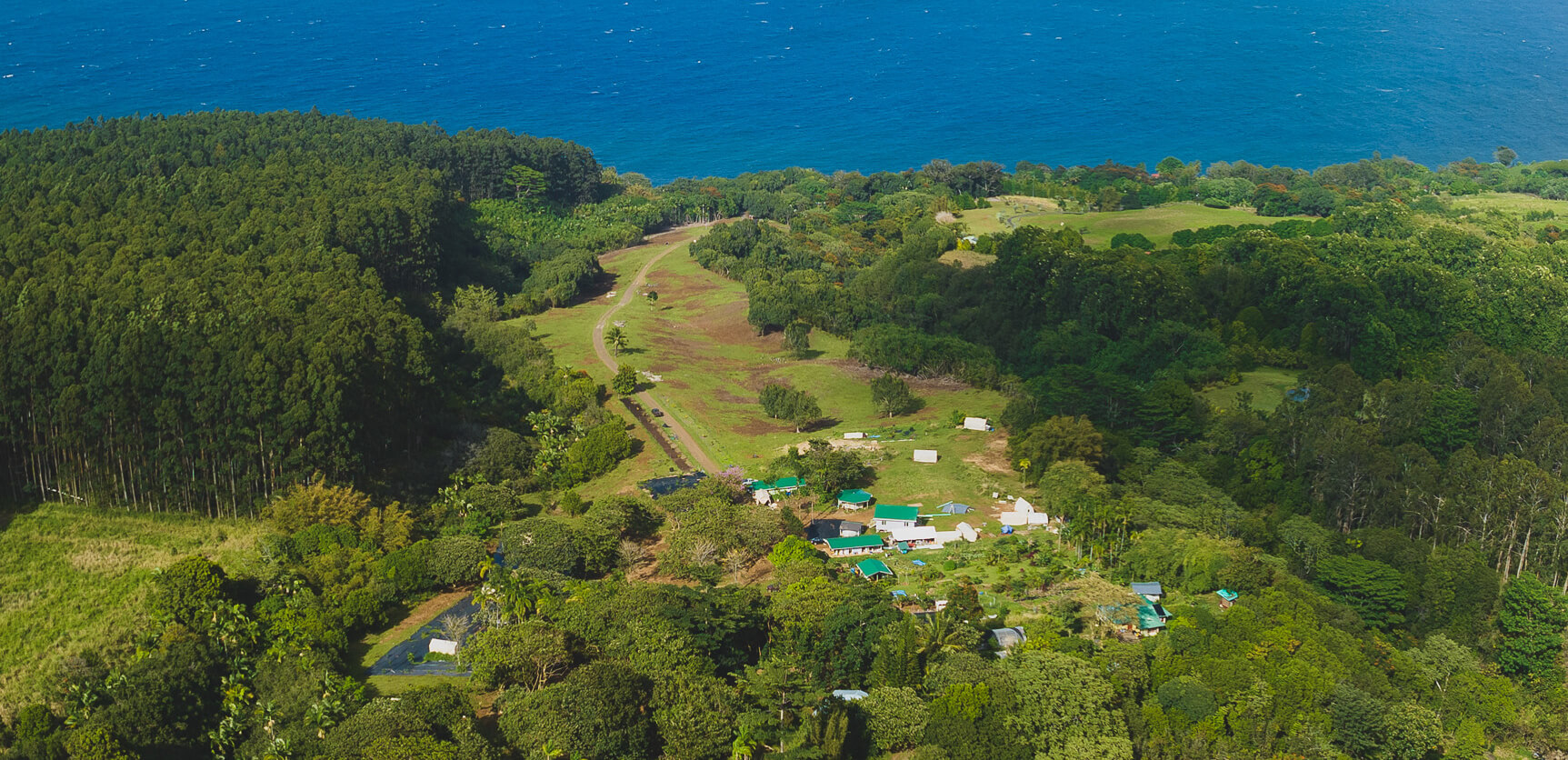
Rainbow Bridge Hawaii is a learning space, healing sanctuary, and intentional community on Hawai‘i Island (Big Island). We practice permaculture in Hawaii through hands-on land stewardship, regenerative agriculture, and community living.
Our goal is simple: build living systems that support people and the land. That means growing food, restoring soil, caring for water, and designing resilient habitats, all while also tending to the human side of community: relationship, healing, and shared purpose.
If you want to learn permaculture in Hawaii, you can join us for a community garden day, a 1-3 month internship/work trade, or our Permaculture Design Course.
Intentional Living in a Permaculture Community
Rainbow Bridge operates as a permaculture community where we live, learn, and work together. This is not only “a place to take a class”, but a living-learning environment where the daily rhythm includes gardens, food forests, shared meals, and ongoing ecological restoration.
People come for different reasons: to gain practical skills, to reconnect with land and body, to find meaningful community, or to explore a more regenerative way of living. In practice, those reasons often weave together.
In community life here, you may find yourself planting and harvesting, building soil with compost, learning tropical growing strategies, caring for shared spaces, and participating in a culture of respect, reflection, and mutual support.
What You’ll Practice Here: Tropical Permaculture on Hawai‘i Island
Permaculture design is about creating systems that work with nature. Instead of forcing the land to change, we observe patterns: sun, water, slope, wind, soil, biodiversity, and design in a way that supports long-term resilience.
Hawai‘i offers a unique context for permaculture design shaped by year-round growing conditions, diverse crops, and extraordinary biodiversity, as supported by research from the University of Hawai‘i College of Tropical Agriculture and Human Resources. It’s also a place where land stewardship matters deeply, so we approach this work with care, humility, and a commitment to regeneration.
At Rainbow Bridge, you’ll see permaculture design principles in action through gardens, food forests, water systems, compost cycles, and community infrastructure. Learning happens through doing, guided practice, and reflection.
Food Forests, Regenerative Gardening, and Soil Building
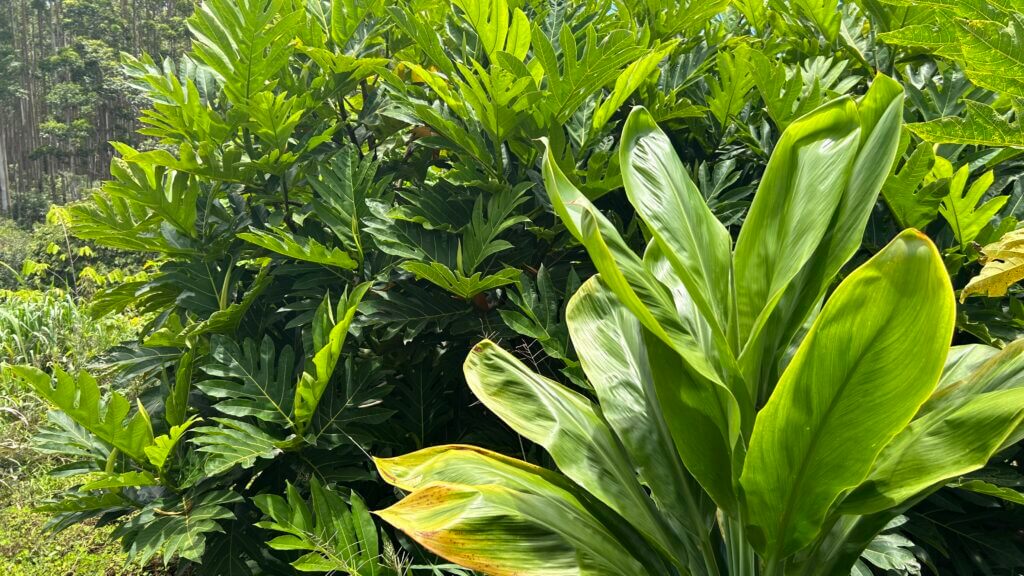
A food forest is a diverse, layered planting system inspired by natural forests and designed to produce food while building habitat and soil health. Food forest design is central to tropical permaculture because it can create abundance with less disturbance over time.
On the land at Rainbow Bridge, we focus on regenerative gardening practices that build soil fertility and long-term productivity. Depending on the season and projects underway, your learning may include:
- Food forest planting and maintenance
- Compost systems and soil building
- Mulching and moisture management strategies
- Propagation and plant care in a tropical climate
- Harvesting and processing what the land provides
Integrated Animal Systems & Closed-Loop Ecology
In addition to plant-based systems, we are actively integrating animal systems into our permaculture practices to support more complete ecological cycles.
These systems are designed to turn waste into resources, improve soil fertility, and create more resilient food systems. Depending on current projects, this may include:
- Black soldier fly larvae production as a regenerative protein source for chickens
- Rotational grazing systems for rescued dairy cows to support pasture health and soil regeneration
- Expanded composting systems that cycle organic waste back into the land
By integrating animals thoughtfully, we move closer toward a closed-loop system in which outputs from one element become inputs to another, reducing waste and strengthening the overall ecosystem.
Permaculture Internship & Work Trade Hawaii (1–3 Months)
If you want a deeper experience, we offer a 1–3 month work trade program that functions as a permaculture internship in Hawaii. Interns live within the community and participate in daily land-based projects while learning how a regenerative community functions.
A work trade experience can be a strong fit if you want structure, hands-on learning, and real responsibility—more than a weekend volunteer day.
Common learning areas include:
- Garden development and regenerative gardening
- Food forest care and planting strategies
- Soil building, compost systems, and ecological cycles
- Basic ecological design projects
- Natural building and practical skills that support community living
If you’re exploring “work trade hawaii” opportunities and want something grounded in education, community, and land stewardship (not just a short-term gig), Rainbow Bridge offers a values-led pathway.
FAQ
What is a permaculture community?
A permaculture community is a living-learning environment where people apply ecological design principles to daily life. At Rainbow Bridge Hawaii, this means residents, interns, students, and visitors may participate in gardening, composting, food forest care, shared meals, ecological restoration, natural building, and community reflection. The community itself becomes part of the learning experience.
What is a food forest?
A food forest is a diverse, layered planting system inspired by a natural forest. It usually includes trees, shrubs, vines, herbs, ground covers, and root crops that work together to produce food, build soil, create habitat, and support long-term abundance. Food forests are especially important in tropical permaculture because they can produce year-round while reducing soil disturbance.
How are animals part of Rainbow Bridge Hawaii’s permaculture system?
Rainbow Bridge Hawaii is integrating animals into its permaculture systems to create more complete ecological cycles. This may include black soldier fly larvae production as a regenerative protein source for chickens, rotational grazing for rescued dairy cows, and expanded composting systems that return organic waste to the land. These practices help reduce waste and build soil fertility.
Who is Rainbow Bridge Hawaii’s permaculture programming for?
Rainbow Bridge Hawaii’s permaculture programming is for people interested in regenerative living, land stewardship, tropical agriculture, intentional community, ecological restoration, food forests, natural building, and hands-on learning. It may be a good fit for beginners, aspiring homesteaders, students, work-traders, gardeners, community builders, and people exploring a more land-connected way of life.
Permaculture Design Course in Hawaii (PDC)
In addition to internships, Rainbow Bridge hosts a Permaculture Design Course. This course provides a structured introduction to permaculture principles and ecological design, rooted in the realities of Hawai‘i Island.
Students explore topics such as:
- Regenerative agriculture foundations
- Tropical permaculture systems
- Soil health and composting
- Water management and site observation
- Food forests and perennial crops
- Sustainable community design
Because the course includes hands-on learning, students leave with both knowledge and lived experience.
Learn more about our Permaculture Design Course in Hawaii.